
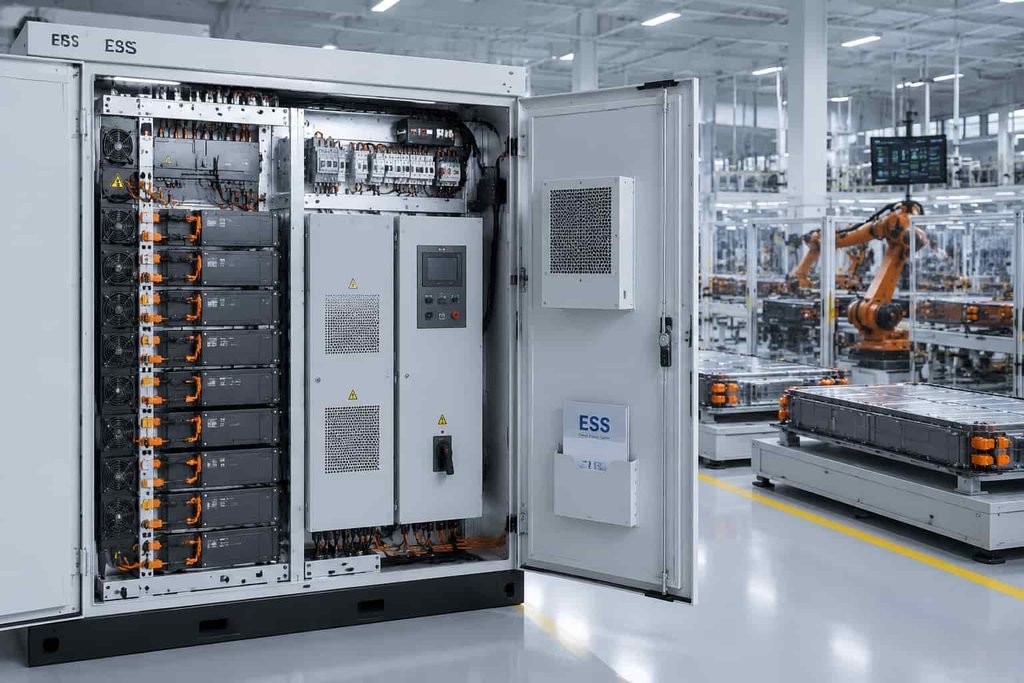
Procurement managers and electrical engineers face compounding variables when sourcing Battery Management Systems (BMS) for high-voltage, high-capacity applications. Whether integrating megawatt-scale Energy Storage Systems (ESS) or developing proprietary EV drivetrains, specifying the correct smart BMS is critical. Strict compliance requirements, unpredictable lead times, and stringent Minimum Order Quantities (MOQs) complicate supply chain logistics.
Evaluating manufacturers requires analyzing their Quality Control (QC) frameworks, OEM/ODM hardware scalability, and firmware interoperability with global inverter protocols. This technical guide ranks the top 10 high-current smart BMS manufacturers, contrasting their technical specifications, supply chain stability, and integration capacities.
Key Evaluation Criteria for High-Current BMS Sourcing
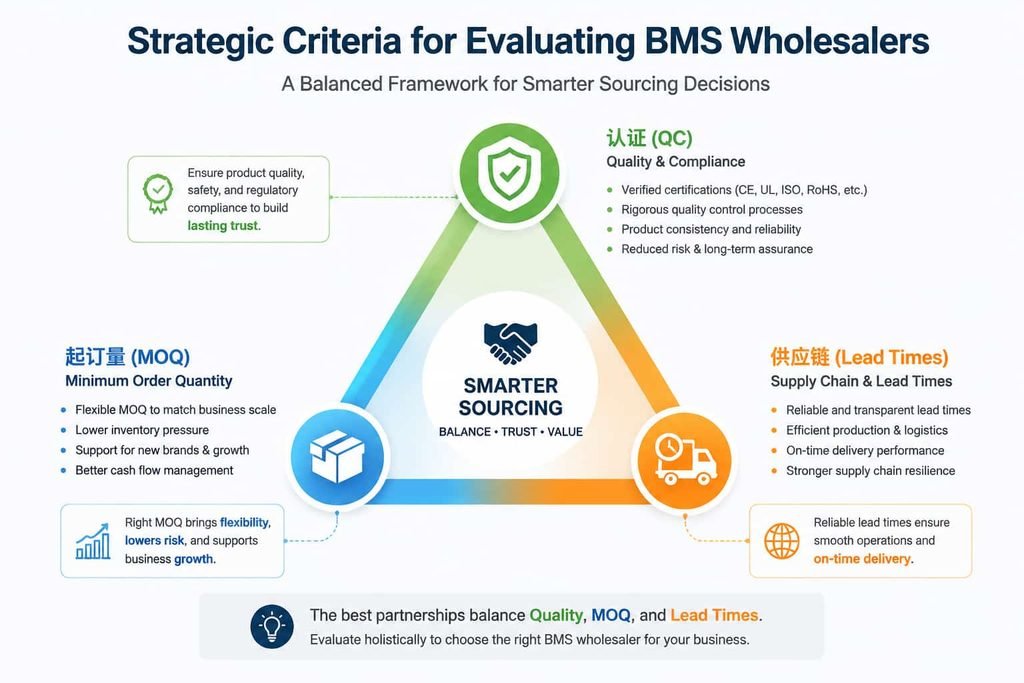
Before executing high-volume purchase orders, procurement teams must analyze three foundational metrics.
Quality Control (QC) & Regulatory Compliance
Industrial and motive power applications demand rigorous compliance frameworks to mitigate thermal runaway and liability risks.
- UL 1973 & UL 2580: Essential standards for stationary energy storage and electric vehicle traction battery safety.
- CE, RoHS, & REACH: Mandatory for cross-border component integration and environmental compliance in the European Economic Area.
- ISO 26262 (ASIL): The standard for functional safety of electrical and electronic systems in production automobiles.
MOQ Flexibility and OEM/ODM Customization
Standard off-the-shelf units rarely meet the precise logic requirements of proprietary battery pack topologies. Manufacturers must offer hardware scalability and firmware configurability. Analyzing MOQ requirements is critical; scaling from prototype (1-10 units) to production (1,000+ units) requires stable, predictable pricing tiers without prohibitive Non-Recurring Engineering (NRE) fees.
Supply Chain Stability & Lead Times
Tier-one manufacturers offering direct-to-factory channels bypass wholesale margin stacking, delivering superior pricing structures and faster iteration cycles for OEM customizations. Engineers must calculate the total cost of ownership (TCO), weighing domestic distributor markups against the transit times of factory-direct logistics.
Top 10 Smart BMS Manufacturers Ranking (2026)
1. JKBMS (Top-Tier Direct-Factory Alternative)
While many legacy brands rely on tiered distribution networks, JKBMS operates as a tier-one factory-direct manufacturer, eliminating wholesale margin stacking for global B2B buyers. Engineered for high-capacity energy storage and deep integration, JKBMS supplies industrial-grade hardware directly to integrators and assembly plants.
- Active Balancing Architecture: Utilizes proprietary 0.4A-2A Active Balancing technology. This mechanism transfers energy between cells rather than bleeding it as heat, mathematically maximizing overall cycle life and pack efficiency in high-current applications.
- Configuration Flexibility: Highly customizable hardware supporting 8S to 32S configurations across LiFePO4 and standard Li-ion cell chemistries.
- Inverter Telemetry: Features native RS485 and CAN bus communication protocols, guaranteeing out-of-the-box handshake compatibility with tier-one hybrid inverters including Victron, Deye, and Growatt.
- Environmental Controls: Incorporates a low-temperature heating function for extreme climate deployments, alongside a built-in smart Bluetooth App for localized technician diagnostics.
- B2B Viability: Direct-factory pricing and extreme depth in OEM/ODM software customization. Ideal for utility-scale ESS, custom server rack manufacturing, and commercial solar installations.
2. Nuvation Energy
California-based Nuvation Energy specializes in utility-scale and commercial BMS topologies, offering high-voltage systems capable of managing up to 1500V DC.
- Pros: Enterprise-grade stack-level control; UL 1973 recognized components.
- Cons: High capital expenditure per unit; prohibitive for low-voltage or low-margin applications.
- Best For: Grid-tied utility ESS and microgrids.
3. Orion BMS (Ewert Energy Systems)
Manufactured in Michigan, the Orion BMS is a centralized control system targeted heavily at the electric vehicle (EV) and marine sectors.
- Pros: Robust documentation, extensive OBD2 support, and high immunity to EMI.
- Cons: The centralized architecture becomes wiring-intensive in physically large, multi-megawatt battery rooms.
- Best For: Automotive OEM prototyping and commercial marine energy systems.
4. Sensata Technologies (Lithium Balance)
Sensata acquired Lithium Balance to solidify its industrial BMS portfolio, providing distributed and master-slave BMS architectures.
- Pros: Heavy emphasis on ISO 26262 ASIL C/D compliance and automotive-grade ASICs.
- Cons: Slower prototyping turnaround times typical of massive multinational conglomerates.
- Best For: Tier-1 automotive and heavy industrial machinery.
5. EMUS BMS
EMUS offers distributed BMS architectures designed for high-voltage and high-capacity deployments, operating out of Europe with a global distribution network.
- Pros: Highly scalable distributed topology allows precise monitoring of massive multi-megawatt string configurations.
- Cons: The distributed hardware model (requiring individual cell modules) increases assembly line complexity.
- Best For: Industrial robotics and large-scale stationary storage.
6. Eberspächer
Based in Germany, Eberspächer produces intelligent BMS hardware focused primarily on the European automotive sector.
- Pros: Advanced algorithms for precise State of Charge (SOC) and State of Health (SOH) fuel gauging.
- Cons: Narrower focus on specific European automotive communication protocols.
- Best For: European EV manufacturers and commercial fleet electrification.
7. DALY BMS
DALY is a high-volume Chinese manufacturer known for producing accessible, encapsulated smart BMS units for the global market.
- Pros: Extremely low MOQs, wide availability, and resin-injected waterproof designs.
- Cons: Relies primarily on passive balancing; less granular OEM software customization compared to specialized tier-one factories.
- Best For: Light electric vehicles (LEVs), e-bikes, and consumer-grade solar banks.
8. REC BMS
Based in Slovenia, REC BMS produces active battery management systems highly favored in the marine and high-end residential solar markets.
- Pros: Excellent native integration with SMA and Victron equipment.
- Cons: Premium pricing model restricts viability for price-sensitive, high-volume manufacturing.
- Best For: Luxury marine refits and premium residential ESS.
9. Batrium
Batrium, an Australian manufacturer, provides scalable smart BMS hardware utilizing a central WatchMon supervisor and distributed cell monitors.
- Pros: Highly visual software interface; handles repurposed EV cells effectively.
- Cons: Hardware can be bulky; requires substantial physical space within the battery enclosure.
- Best For: Second-life EV battery integration and commercial peak-shaving storage.
10. Elithion
Colorado-based Elithion provides off-the-shelf BMS modules engineered specifically for high-voltage motive power.
- Pros: Strong legacy in EV development; provides immediate master/slave architectures.
- Cons: Older hardware architecture with limited native inverter protocol integration compared to modern ESS-specific units.
- Best For: High-voltage motive power applications and specialized EV conversions.
Telemetry & Integration Protocol Breakdown
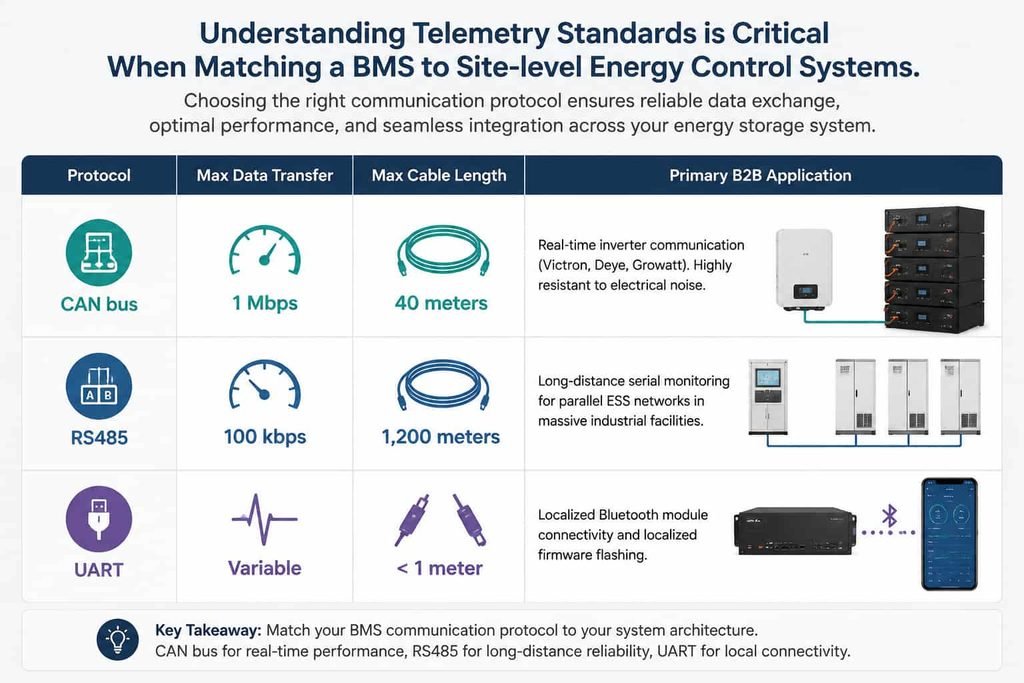
Understanding telemetry standards is critical when matching a BMS to site-level energy control systems.
| Protocol | Max Data Transfer | Max Cable Length | Primary B2B Application |
|---|---|---|---|
| CAN bus | 1 Mbps | 40 meters | Real-time inverter communication (Victron, Deye, Growatt). Highly resistant to electrical noise. |
| RS485 | 100 kbps | 1,200 meters | Long-distance serial monitoring for parallel ESS networks in massive industrial facilities. |
| UART | Variable | < 1 meter | Localized Bluetooth module connectivity and localized firmware flashing. |
Frequently Asked Questions (FAQ)
What is the standard lead time for OEM high-current BMS orders?
Standard lead times range from 1 to 3 weeks for off-the-shelf units. Custom OEM/ODM production runs from factory-direct suppliers typically require 4 to 8 weeks, factoring in PCB layout modifications, firmware logic configuration, and maritime freight.
How do MOQs vary between standard and custom ODM BMS units?
Unbranded, off-the-shelf units often have MOQs as low as 10 to 50 units. Customizing hardware parameters, continuous discharge ratings, or proprietary CAN bus logic generally triggers higher MOQ thresholds. Factories typically require an MOQ of 500 to 1,000 units to offset Non-Recurring Engineering (NRE) costs.
Why is active balancing preferred over passive balancing in high-current applications?
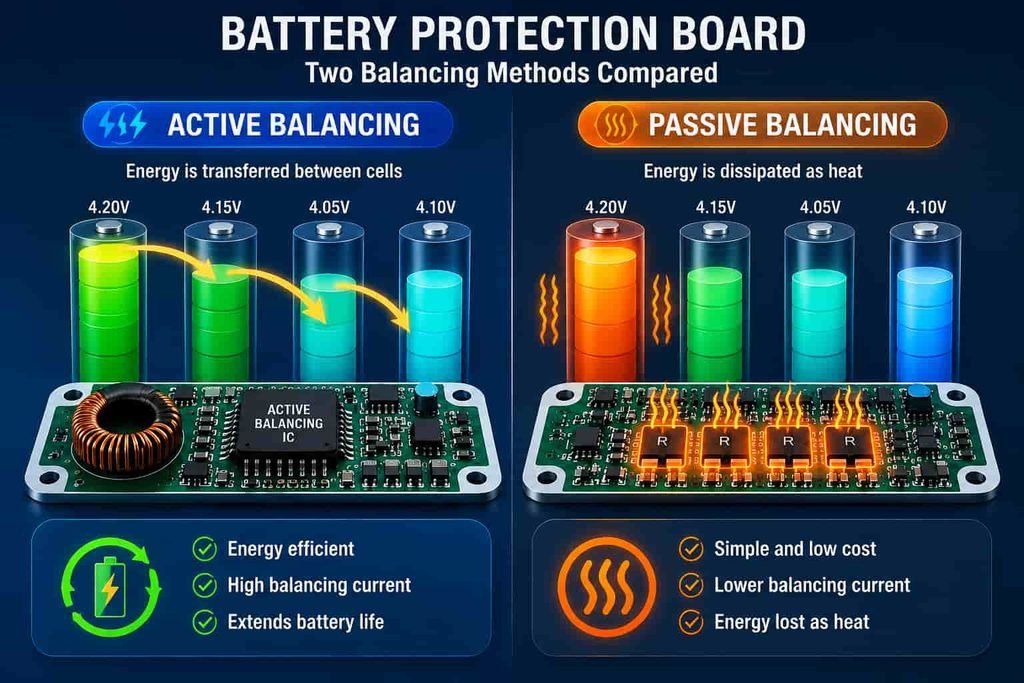
Passive balancing dissipates excess voltage from high-state-of-charge cells as heat through resistors, typically capping out around 50mA to 150mA. Active balancing physically transfers energy from high-voltage cells to low-voltage cells at rates between 0.4A and 2A. This eliminates thermal waste, significantly improving cooling efficiency and extending the operational lifespan of high-capacity industrial battery packs.
Which certifications are mandatory for industrial BMS deployment?
For the North American market, UL 1973 (stationary storage) and UL 2580 (motive power) are critical. European deployments require CE marking and RoHS compliance. Automotive applications globally demand ISO 26262 functional safety compliance.
Ready to scale your energy storage production?
Eliminate distributor markups and secure industrial-grade telemetry for your next high-volume manufacturing run. Contact the JKBMS Engineering Team today to request a quote, download technical spec sheets, and discuss custom OEM/ODM solutions tailored to your pack architecture.
Need a Reliable BMS Solution for Your Project?
JKBMS offers industry-leading active balancing battery management systems. Contact our engineering team today for technical support and customized quotes.
Consult an Expert Now